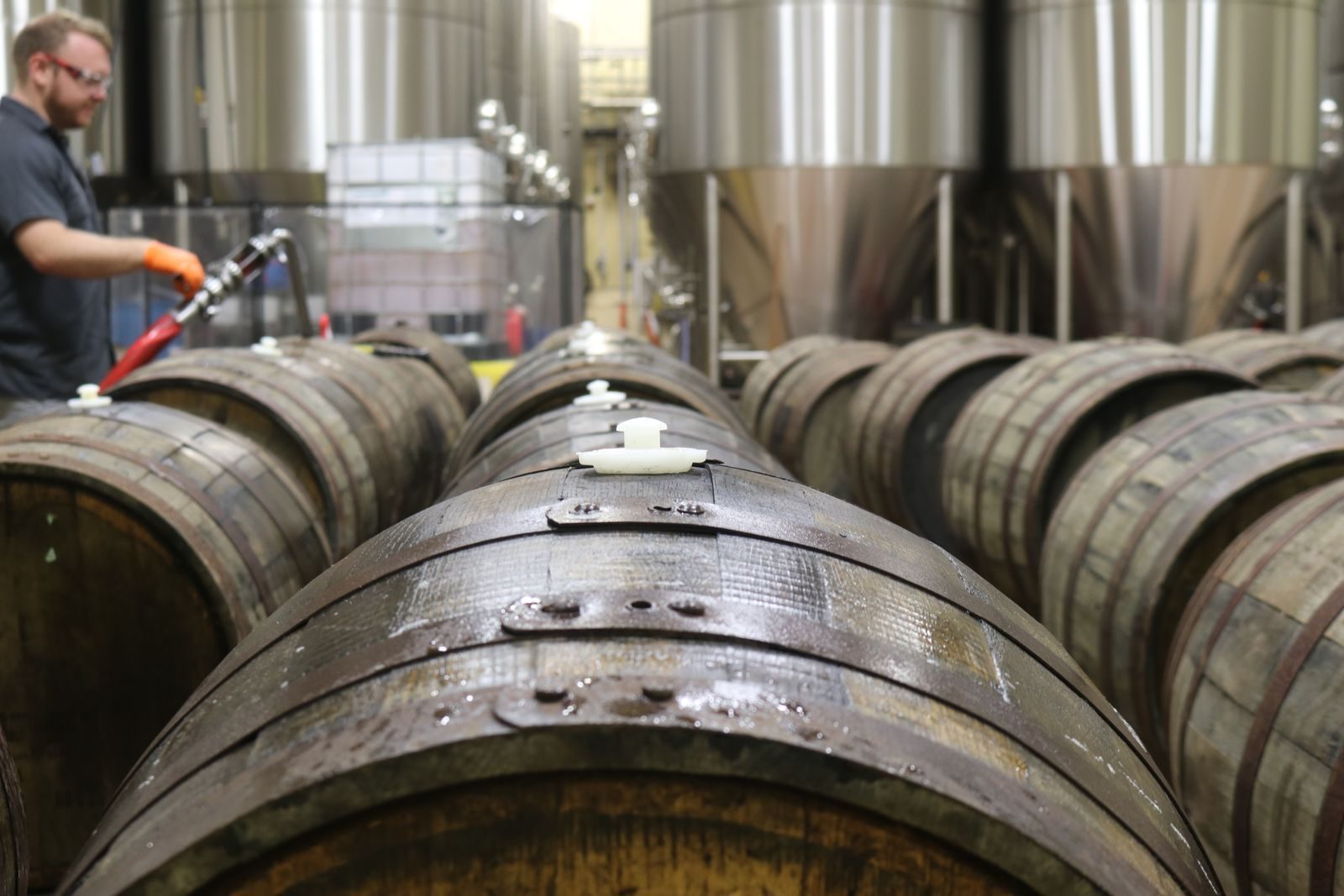
On a Tuesday morning in a converted radiator shop on the west side of Grand Rapids, the barrel room sits at 58 degrees and smells like vanilla, wet cardboard, and money.
Half Mile Brewing put its first barrels down in 2019, when every spare square foot was still needed for fermenters. Five years later the cellar holds 96 barrels, and the brewery releases one blended stout every quarter instead of a new IPA every week. By the numbers, it is a terrible use of floor space. It is also the only thing keeping the taproom full on Thursdays.
The math of waiting
A used bourbon barrel costs $180 to $240. Fill it and you have tied up 53 gallons of beer, a keg’s worth of labor, and a year of insurance on a product you cannot sell. For a brewery making 1,200 barrels a year, that is not a marketing stunt. It is a second business with its own cash-flow cycle.
“A barrel is a loan you take out against your own cash flow,” says co-founder Dana Whitcomb. “You just hope the beer pays a better interest rate than the bank.”
Dana Whitcomb, co-founder, Half Mile Brewing
What patience tastes like
The payoff is not the barrel itself. It is what a barrel lets a brewer do with time: blend a two-year stout with a fresh one, taste the seams, adjust, wait another month. That is a different skill from brewing, closer to blending than to fermentation, and most small teams learn it the hard way.
It also changes the release calendar. A brewery that used to chase four seasonal launches a year now ships one bottle release and two draft-only variants. The taproom regulars complain for about a week. Then they buy the bottles.
None of it scales easily, which may be the point. The barrel room is one of the few places left in beer where being small is an advantage instead of an apology.